There are songs we love to listen to alone. Others make us get up and dance. And still others take on a special power when we share them with the people we love.
Sometimes these are the same songs. But not always.
We can love a particular rock artist without ever feeling the urge to dance to their music. We can get swept up in a rhythm we rarely listen to at home. And at a family celebration we can be moved by a song we’d never put on our own personal playlist.
There’s no contradiction in that.
Music plays different roles in our lives. It can be a personal refuge, a means of self-expression, or an experience that connects us to others.
This distinction matters especially when planning a wedding.
Because wedding music isn’t just a collection of favorite songs. It’s where the couple’s personal story meets the musical world of the people they’ve chosen to celebrate with.
The Three Musical Circles Method
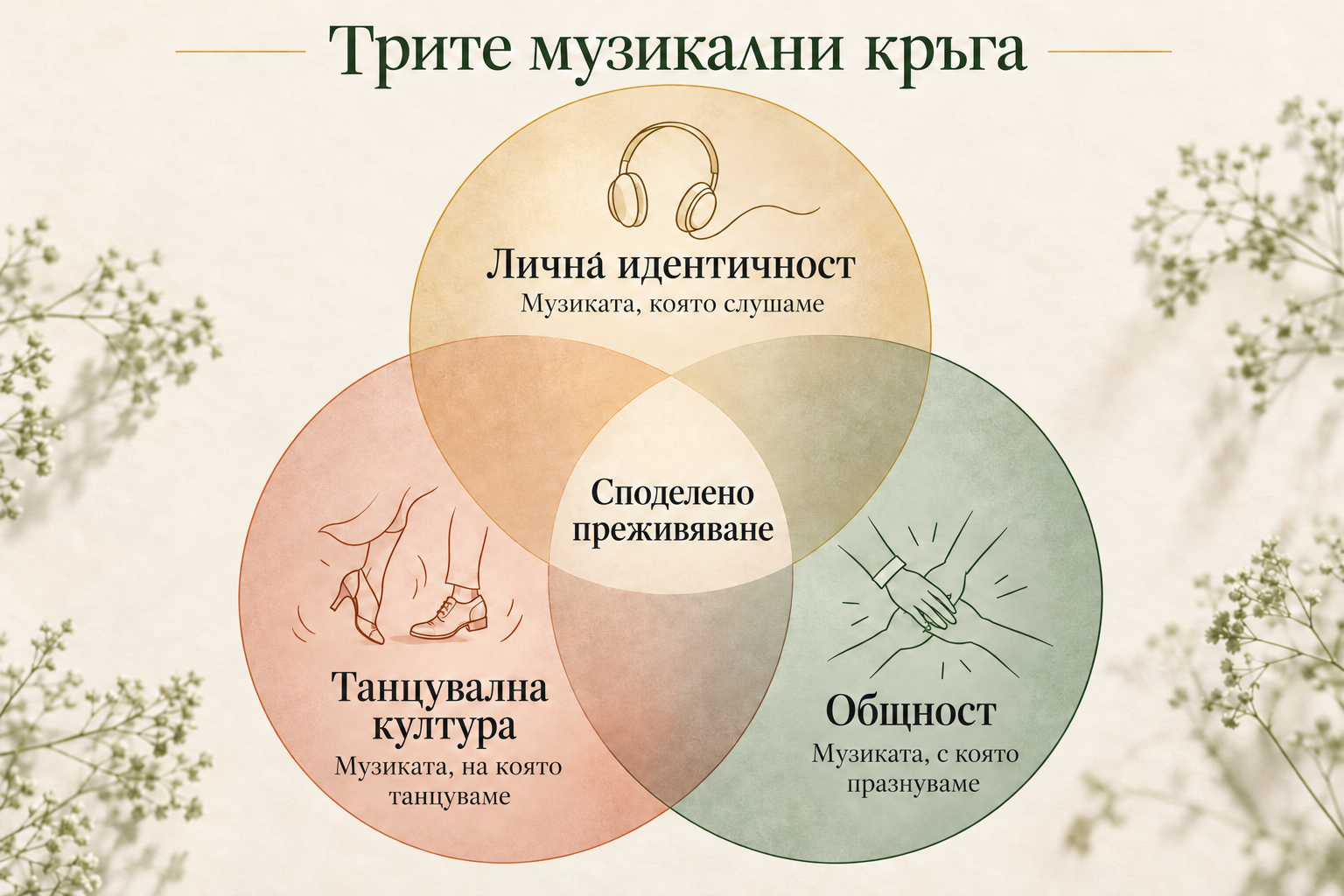
In my professional practice I use a simple framework for understanding musical preferences, which I call the Three Musical Circles Method.
It looks at music through three lenses:
- The music we love to listen to.
- The music we actually dance to.
- The music we celebrate with together.
These aren’t three separate playlists or strictly divided categories. A single song can belong to all three circles at once.
The point of the method is to understand what role music plays for specific people in a specific moment.
First Circle: Music for Listening — Personal Identity and Memory
Our favorite songs are often much more than musical works.
They can be tied to a particular period of our life, to someone we love, to a trip, a friendship, or an experience that left a lasting mark.
Sometimes a few opening chords are enough to bring back not just a place or an event, but the feeling we had at the time.
This link between music and personal memory is studied in cognitive psychology. Researchers call it music-evoked autobiographical memory.
It helps explain why a relatively unknown song can mean so much to two people, while a worldwide hit might not stir the same emotion in them.
What does this mean for the wedding?
This first circle reveals the couple’s musical identity.
This is where the songs that tell their story belong: the music for the first dance, for special moments and rituals, as well as the favorite tracks they want to hear throughout the evening.
They don’t have to be dance hits.
A quiet ballad can mean far more than a song everyone knows.
The professional task is to understand its personal value and find it the right place within the overall musical concept.
Because there are moments when the music should, above all, belong to the couple.
Second Circle: Music for Dancing — Rhythm, Movement, and Freedom
Liking a song and wanting to dance to it aren’t the same thing.
How we perceive rhythm, tempo, and musical structure affects how much we want to move.
Research on musical behavior uses the term groove — a quality of music tied to the pleasure and urge to move in time with the beat.
But there’s no universal formula that gets everyone dancing.
Our own experience matters too.
Someone who loves salsa recognizes certain rhythms and dance patterns. Another feels right at home with disco and funk. A third prefers modern club music, and a fourth joins in happily for a Bulgarian horo.
Familiar movements often give us confidence.
When we know how to respond to a particular rhythm, it’s easier to relax and enjoy dancing.
Of course, the desire to dance also depends on mood, company, setting, and the specific moment.
What does this mean for the wedding?
The second musical circle helps us understand the couple’s and their close circle’s real dance culture.
That’s why, during preparation, it helps to ask a different question than the usual one:
When was the last time you truly enjoyed dancing, and what was playing then?
The answer sometimes reveals more than a list of favorite artists.
The music we value as listeners isn’t always the same music that makes us feel free on the dance floor.
That difference is important to understand before the wedding itself.
Third Circle: Music for Celebrating — Community and Belonging
The third circle is tied to a particular human experience: the joy of doing something together.
There are songs that matter less for the composition itself and more for the people we share them with.
A familiar tune can take a whole group of friends back to a shared memory.
A beloved family song can bring several generations together.
And a shared dance can create a sense of closeness even between people with very different musical tastes.
Psychology also looks at experiences like this through the concept of interpersonal synchrony.
When people coordinate their movements to a shared rhythm, under certain conditions this can support a sense of social connection.
The Bulgarian horo is a particularly interesting example.
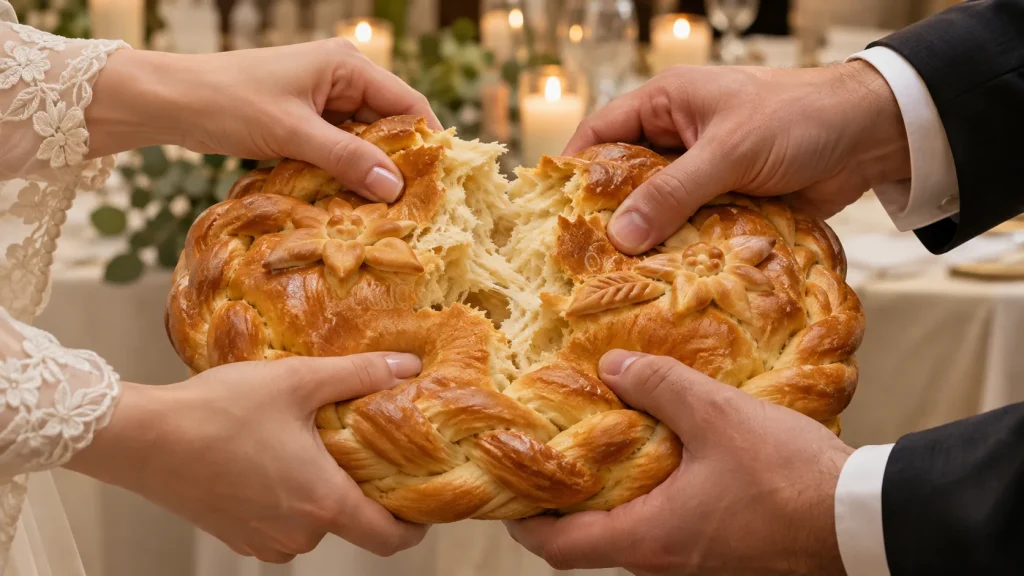
People of different ages and temperaments hold hands and follow a shared dance structure.
Everyone brings their own individual experience, but the movement itself becomes collective.
Of course, not everyone feels the same emotions, and not everyone enjoys dancing the horo.
But when a dance like this is part of the guests’ culture, it can become a natural space for a shared experience.
The same thing can happen when friends sing a familiar song together, or when different generations discover a shared favorite hit.
What does this mean for the wedding?
The third circle is the guests’ musical world.
This is where family traditions, shared memories, generational preferences, and the ways different groups celebrate all come in.
The goal isn’t to satisfy every individual request.
The goal is to find the music that can create natural moments of closeness between people.
Because sometimes the most powerful moment of the celebration isn’t tied to the song everyone would pick for themselves, but to the song everyone, in that moment, wants to share.
Where Do the Three Musical Circles Meet?
Picture three overlapping circles.
In the first is the couple’s personal musical history.
In the second — the rhythms and styles they and their close circle love to dance to.
In the third — the guests’ musical traditions, memories, and preferences.
In the areas where these circles overlap, we find opportunities for a shared musical experience.
But that doesn’t mean every song has to belong to all three at once.
One track might be chosen for its personal meaning. Another — for its dance energy. A third — because it brings different generations together.
Professional skill isn’t about mechanically cycling through the three circles — it’s about building natural transitions between them.
That way the musical program gains continuity without losing its ability to adapt to the room’s mood.
The Practical “Car – Club – Table” Test
How can a couple apply this method while putting together their wedding playlist?
Here’s a short exercise.
Pick about ten songs you’re considering for the program, and for each one ask yourself three questions.
Car: Would we listen to this song on a road trip?
This question helps you spot the music you genuinely love — the music that’s part of your personal world.
Club: Would we get up and dance if we heard it out somewhere?
Here we’re looking for the real dance reaction, not just approval of the artist.
Table: Would our loved ones sing or dance along with us at a shared celebration?
This question points your attention to the shared memories and musical habits of the group.
A song doesn’t need to get just one answer.
In fact, a single track can belong to all three categories at once.
This exercise doesn’t automatically decide which songs should play at the wedding. It helps you understand why you want to include them.
And that’s a much more useful starting point for the conversation with your DJ.
Why Do Different Generations Experience Music Differently?
Every wedding brings together people with different life stories.
The music that shaped the parents’ youth might be unfamiliar to some of the friends.
A song that means a huge amount to one group might not get the same reaction from another.
These differences don’t necessarily mean a lack of interest or willingness to take part.
They reflect different cultural experience, musical habits, and personal associations.
So there’s no need to look for a single style that satisfies everyone for the whole evening.
It makes more sense to build a musical concept that keeps the couple’s character while still giving different guests a chance to join in.
Sometimes that means setting aside special space for the couple’s personal songs.
Other times — shifting to a more energetic dance selection.
And at certain moments — making room for music that carries shared memories and traditions.
This isn’t a compromise on personal taste.
It’s a deliberate way of building a shared celebration.
What Is the Role of a Professional Wedding DJ?
A good wedding playlist matters. But on its own, it doesn’t fully capture the atmosphere that will actually take shape.
That’s why preparing the musical program isn’t just about gathering songs.
It includes talking about the couple’s character, about the guests, about the key moments of the celebration, and about the freedom the professional has in choosing the music.
During the event itself, one more factor comes into play — the real-time reaction of the people there.
A professional DJ has to be able to read that reaction, judge how the mood is developing, and build the right musical transitions.
But that freedom rests on a clear foundation: the couple’s wishes, stated in advance.
Their musical identity shouldn’t get lost in the pursuit of a constantly packed dance floor.
Professional music selection is a combination of preparation, musical knowledge, observation, and respect for the people the music is playing for.
That’s exactly what turns choosing songs into part of the overall organization and atmosphere of the celebration.
Five Questions to Discuss Before the Wedding
Before you send off your final playlist, take time for a deeper conversation.
1. Which songs tell our story?
Identify the music that has special personal meaning for the two of you.
2. What music do we actually love dancing to?
Think back to real experiences, not just your favorite artists.
3. What music connects our families and friends?
Think about the shared memories, traditions, and musical preferences of the different groups.
4. Which styles do we want included, and which would we rather avoid?
Clearly stated wishes and limits help keep your celebration true to its character.
5. How much freedom are we giving our DJ to adapt the music to the room?
Agreeing on boundaries in advance lets professional judgment work in support of your vision.
These questions can be worth more than a long list of songs, because they help reveal not just what you like, but how you want to experience your wedding.
Music Is Personal. The Celebration Is Shared.
A wedding night has room for different musical experiences.
For the songs that belong to the couple.
For the rhythms that unlock the dance floor’s energy.
And for those moments when people with different tastes find a shared melody, movement, or memory.
None of these dimensions matters more than the others.
Bringing them together is what gives the musical atmosphere its character.
To me, being a professional DJ and host means understanding not just the music, but the people it’s playing for.
Knowing the couple’s personal story. Respecting the differences between guests. Being able to build smooth transitions between the evening’s different moods.
Because the most valuable musical concept isn’t the one where everyone likes every song. It’s the one that keeps the couple’s identity intact while giving different people the chance to share in their joy.
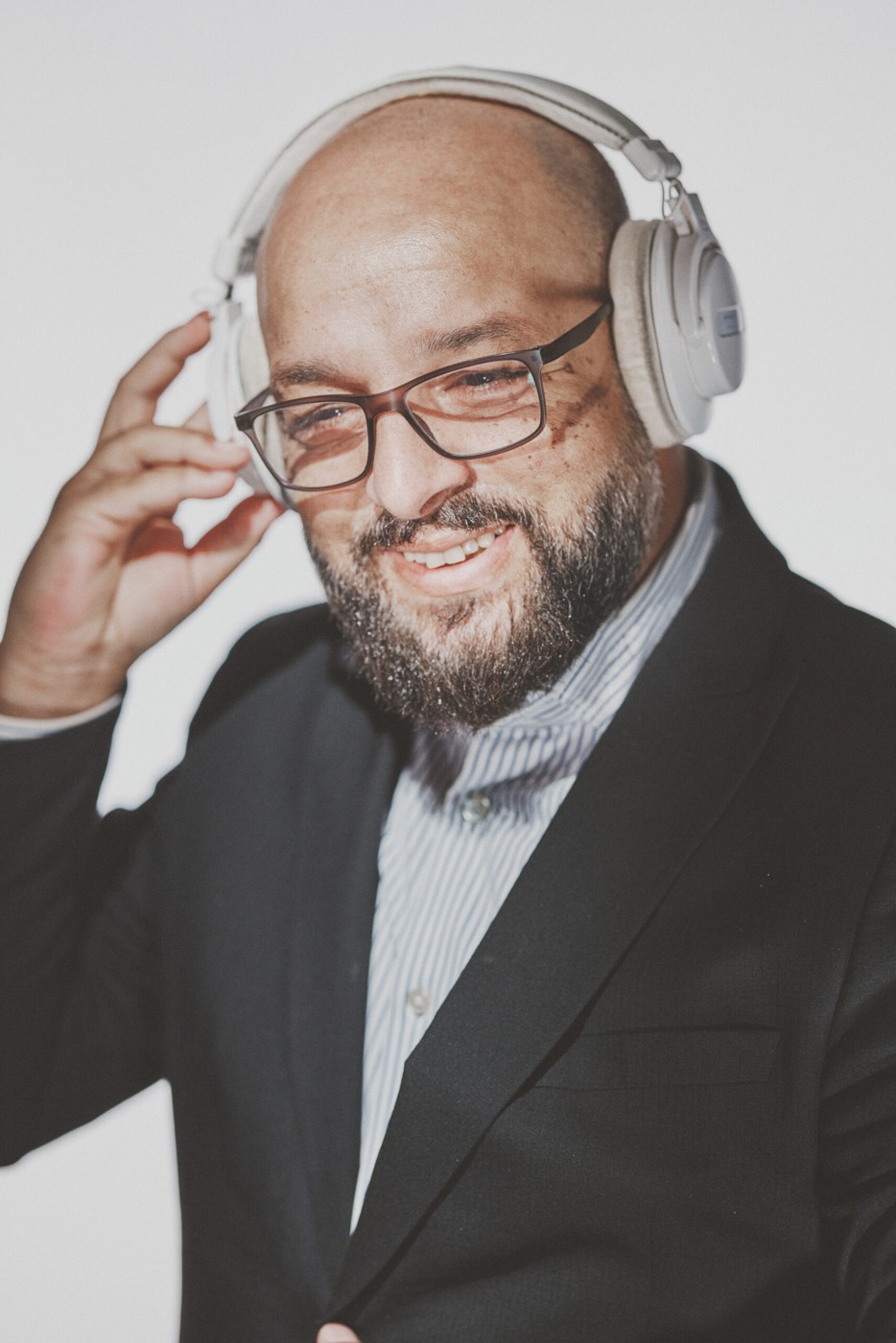
Mr. Stevie | DJ & Wedding Host
Sound, DJ, and host for your celebration.
Sources:
1. Petr Janata (2009) — The Neural Architecture of Music-Evoked Autobiographical Memories. Scientific publication.
2. Maria Witek et al. (2014) — Syncopation, Body-Movement and Pleasure in Groove Music. Scientific publication.
3. Bronwyn Tarr, Jacques Launay and Robin Dunbar (2014) — Music and Social Bonding: “Self-Other” Merging and Neurohormonal Mechanisms. Scientific publication.